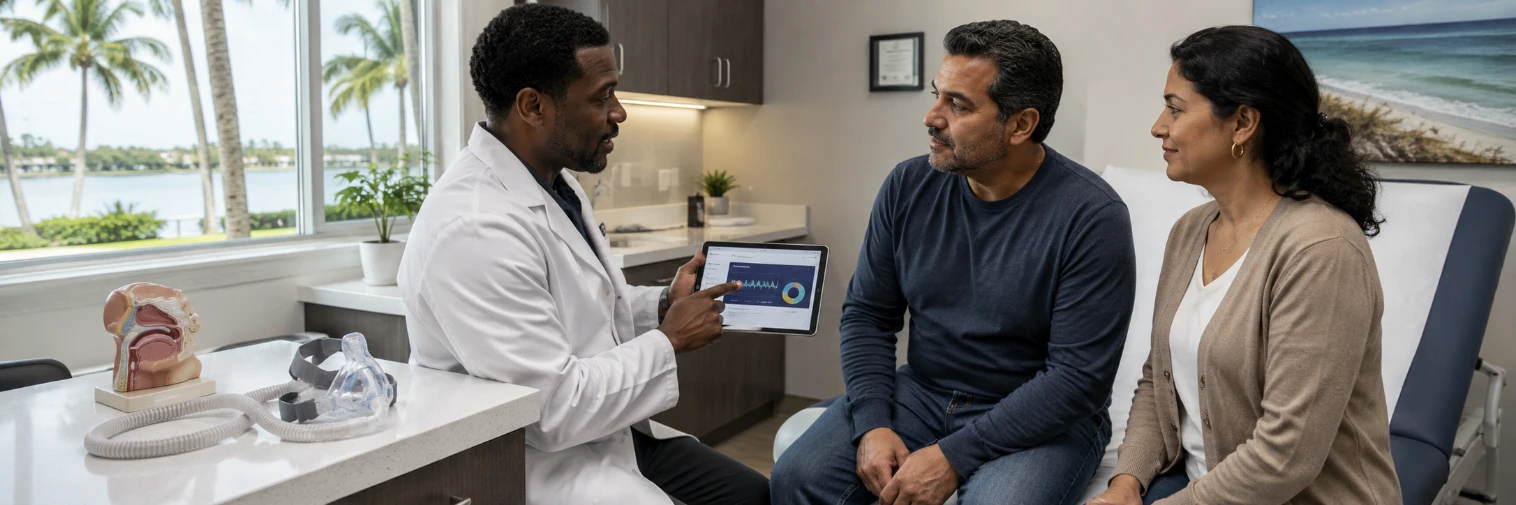
Sleep apnea care now includes a medication option for a specific group of adults, but diagnosis still comes before treatment. Fort Myers patients may hear about an injection, home sleep tests, CPAP, oral appliances, or weight-focused care and wonder which path actually applies to them. The answer depends on the type and severity of sleep apnea, symptoms, other health conditions, body weight, medication history, and treatment tolerance. A primary care visit can organize those pieces before a patient moves toward testing or specialty care.
Sleep Apnea Decisions Start With the Right Clinical Question
- Review snoring, witnessed breathing pauses, daytime sleepiness, blood pressure, weight trends, and medicines together.
- Clarify whether symptoms support a sleep-study referral rather than choosing treatment from symptoms alone.
- Discuss whether newer medication options fit a confirmed diagnosis, obesity status, and the rest of the treatment plan.
A Primary Care Visit Can Organize the Next Step
Membership-based primary care can create more room to review symptoms, medications, cardiometabolic risk, and follow-up questions before testing or specialty care. See how DPC works as part of ongoing day-to-day care and coordination.
Physician-reviewed content • Evidence-aware care • Personalized treatment planning
Keep Testing, Treatment, and Follow-Up Connected
Sleep apnea often involves more than one decision over time. You can meet the primary-care provider and review common DPC questions before deciding whether the membership model fits your ongoing care needs.
What Actually Changed in Sleep Apnea Treatment
A New Medication Option Has a Narrow Indication
In December 2024, the FDA approved Zepbound (tirzepatide) for moderate-to-severe obstructive sleep apnea in adults with obesity. The indication requires use with reduced-calorie nutrition and increased physical activity. FDA based the decision on two 52-week randomized trials involving 469 adults with obesity and moderate-to-severe obstructive sleep apnea who did not have type 2 diabetes. One trial included people using positive airway pressure, and the other included people who were unable or unwilling to use it.
The studies showed a clinically meaningful reduction in apnea and hypopnea events compared with placebo, along with greater weight reduction. FDA stated that the improvement in sleep apnea was likely related to the reduction in body weight. That distinction matters because the medication does not address every reason an airway may collapse during sleep. Sleep apnea can involve airway anatomy, neuromuscular factors, sleeping position, and other clinical issues. Treatment still needs to match the individual cause and severity.
Symptoms That Deserve More Than a Shrug
Nighttime Clues and Daytime Consequences
Loud, frequent snoring is a familiar warning sign, yet snoring alone does not prove that someone has obstructive sleep apnea. A bed partner may notice breathing pauses, repeated gasping, choking, or restless sleep that the person sleeping never remembers. Daytime sleepiness can show up as nodding off during quiet activities, struggling through afternoon work, or feeling unsafe behind the wheel. Morning headaches, dry mouth, fatigue, and unrefreshing sleep can add to the pattern.
Concentration problems can be easy to blame on stress, aging, or a demanding schedule. Sleep apnea becomes more concerning when those problems occur beside snoring, witnessed pauses, gasping, or persistent fatigue. High blood pressure can strengthen clinical concern, and resistant hypertension is recognized as an important risk signal in sleep medicine. Obesity raises risk as well, but a person does not need obesity to have obstructive sleep apnea. Jaw shape, airway anatomy, age, and other factors can contribute.
A symptom conversation is especially useful when another person has observed what happens during sleep. Patients can write down what was noticed, how often it occurs, and whether daytime functioning has changed. Those details give a clinician more to work with than a general statement such as “I sleep badly.” A simple note on your phone is enough.
Why Primary Care Is a Practical Starting Point
Screening Is Not the Same as Diagnosing
Primary care can connect sleep complaints with the rest of a patient’s health rather than treating snoring as an isolated problem. A clinician can review symptoms, blood pressure, weight trends, cardiometabolic conditions, alcohol use, and medicines that may affect sleep or breathing. The medication list matters because sedating drugs and opioids can change the clinical picture and may influence which type of sleep testing is appropriate. A focused exam can identify features that increase suspicion or point toward another explanation. The result may be a sleep study referral, specialist referral, or medication review.
Routine screening of every adult without symptoms remains a separate question. The U.S. Preventive Services Task Force says evidence is insufficient to determine the balance of benefits and harms of screening the general adult population, while clinical evaluation remains appropriate for people who present with symptoms or concerns. That nuance supports a symptom-driven, risk-aware conversation rather than automatic testing for everyone. Primary care can help decide whether a patient’s pattern justifies formal evaluation.
At Fountain of Youth in Fort Myers, Florida, staff stays current on sleep apnea treatment developments so patients can discuss changing options in the context of their overall health. That role can include recognizing warning signs, reviewing related health issues, and coordinating the next step when diagnostic testing or specialty input is needed. It does not replace the objective testing required to establish obstructive sleep apnea.
Bring the Sleep Question Into a Broader Health Review
A sleep concern may intersect with blood pressure, obesity, medications, fatigue, and other health issues. Jeff St. Firmin, PA-C can help review those factors, discuss what deserves formal testing, and coordinate follow-up when specialist input is appropriate; you can review the care team before getting started.
What a Sleep Study Can Clarify
Home Testing Works for Some Adults, Not Everyone
Sleep apnea treatment should not be chosen from symptoms alone because several sleep and breathing problems can look similar from the outside. Objective testing helps determine whether obstructive sleep apnea is present and how severe the breathing disturbance is. The apnea-hypopnea index, often shortened to AHI, counts apnea and hypopnea events per hour of sleep or recording time depending on the test. Severity helps shape treatment discussions, but clinicians consider symptoms and other medical factors as well. A test result becomes most useful when it is interpreted within the full clinical picture.
A medically ordered home sleep apnea test can be appropriate for certain uncomplicated adults with signs and symptoms suggesting a higher risk of moderate-to-severe obstructive sleep apnea. The American Academy of Sleep Medicine states that home sleep apnea testing should be selected from the patient’s medical history and an evaluation by a medical provider. Home testing should not function as a general screening tool for people without symptoms. Automatically scored data alone should not determine the diagnosis or treatment plan.
In-laboratory polysomnography remains important when the situation is more complex or a home test does not provide a reliable answer. A negative or unclear home result may require additional evaluation when clinical concern remains. The goal is not to choose the easiest test; it is to obtain enough trustworthy information to guide care.
Where the New Medication Fits in 2026
Eligibility Starts With Confirmed Disease and Obesity
Tirzepatide is not an all-purpose sleep medicine and is not approved for every person who snores or has sleep apnea. The approved sleep apnea indication applies to adults with obesity and moderate-to-severe obstructive sleep apnea, alongside reduced-calorie nutrition and increased physical activity. A clinician still needs to confirm the diagnosis, assess whether the patient fits the indication, and review the broader treatment plan. Weight-focused treatment may be particularly relevant when obesity contributes substantially to airway obstruction. Patients without obesity need other approaches based on their own anatomy, severity, symptoms, and health profile.
The 2026 current prescribing information reinforces why medication review cannot be skipped. Tirzepatide has contraindications, a boxed warning, and precautions that require individualized discussion before prescribing. Gastrointestinal adverse effects are common, and the label addresses other potentially serious risks and medication considerations. A patient’s history, current medicines, planned procedures, and treatment goals all matter to that decision.
Patients already using CPAP should not assume that starting a weight-focused medication means the machine can be stopped. One pivotal trial studied people already using positive airway pressure, showing that the therapies can occupy different roles in one care plan. Improvement in weight or symptoms does not reveal the current AHI. Repeat assessment may be needed before changing established therapy. A clinician or sleep specialist can decide whether reassessment is appropriate. Stopping effective treatment without reassessment can leave breathing events untreated; a safer sequence is treatment, follow-up, objective reassessment when indicated, and an informed adjustment.
News about additional sleep apnea drugs is moving quickly, but regulatory status matters. An investigational oral candidate was accepted for FDA review in July 2026 with a target action date in 2027. That timing means it is not an approved treatment as of August 29, 2026. Patients should separate clinical-trial headlines from therapies that can currently be prescribed for obstructive sleep apnea.
Sleep Apnea Still Has More Than One Treatment Path
Devices, Weight Management, Oral Appliances, and Procedures
PAP remains a major treatment option because air pressure can keep the upper airway open during sleep. CPAP provides continuous pressure, while other PAP modes adjust pressure in different ways. Oral appliances may be considered for selected adults, particularly when CPAP is not tolerated or another approach is preferred. Some patients may be candidates for positional strategies, targeted surgery, or upper-airway stimulation after appropriate evaluation.
Healthy weight management can matter even when medication is not used, especially when excess weight contributes to airway narrowing. The National Heart, Lung, and Blood Institute describes sleep apnea treatment options that include healthy lifestyle changes, PAP, oral devices, and selected procedures. A patient who struggles with one therapy still needs another workable plan. Mask fit, dry mouth, congestion, or treatment preferences can become part of troubleshooting. The practical goal is a treatment the patient can use and that adequately controls the disorder.
What to Bring to a Sleep Apnea Visit
A little preparation can make a sleep conversation more specific and efficient. Bring information that helps connect nighttime breathing, daytime symptoms, existing treatment, and overall health.
| Bring or note | Useful details | Why it helps |
|---|---|---|
| Bed-partner observations | Snoring, pauses, gasping, choking, restless sleep | Adds information you may not notice while asleep |
| Daytime symptom notes | Sleepiness, headaches, fatigue, concentration problems | Shows how sleep may be affecting daily function |
| Medication list | Prescription drugs, over-the-counter products, supplements | Helps identify medicines relevant to sleep, breathing, or treatment choice |
| Prior sleep records | Sleep-study report, PAP settings, device data if available | Prevents the new discussion from starting without prior results |
| Health measurements | Recent blood pressure readings and relevant weight changes | Connects sleep concerns with cardiometabolic risk and treatment planning |
Follow-Up Matters After Treatment Starts
A sleep apnea plan should answer more than “What treatment did we start?” Follow-up can address symptom change, adherence, side effects, device problems, weight changes, blood pressure, and whether the original plan still fits. Patients using PAP may need troubleshooting rather than abandonment when comfort or mask problems interfere. Patients using medication need monitoring based on the prescribing information and their individual health status.
Meaningful improvement in energy or snoring can be encouraging, but symptoms alone may not show whether breathing events are adequately controlled. Clinical follow-up can identify when repeat testing or specialist reassessment is appropriate. Weight can change over time, medical conditions can change, and treatment tolerance can improve or worsen. The same patient may need a different combination of strategies at different points. Long-term care works best when sleep apnea is treated as an ongoing condition rather than a one-time test result. A documented plan helps clinicians revisit decisions without starting over.
When Ongoing Primary Care May Be Useful
The right next step depends on what is already known, what remains untested, and how sleep symptoms fit with the rest of your health.
- A partner notices repeated breathing pauses, gasping, or loud snoring, while daytime fatigue or concentration problems are becoming harder to ignore.
- You already use CPAP or have a prior sleep study and want to discuss weight changes, medication questions, blood pressure trends, or whether reassessment may be appropriate.
- You have obesity and confirmed obstructive sleep apnea and need a primary-care discussion about whether tirzepatide belongs in the broader treatment conversation.
DPC can support day-to-day evaluation, follow-up planning, medication questions, and care coordination without replacing sleep-specialty testing or emergency services.
When clinically appropriate, DPC telehealth can support follow-up questions, medication discussions, and care planning without implying that every sleep concern can be handled remotely.
Questions Fort Myers Patients Commonly Ask
Can I get sleep apnea medication without a sleep study?
A medication discussion does not substitute for confirming obstructive sleep apnea and its severity. The approved tirzepatide indication is specifically for adults with obesity and moderate-to-severe obstructive sleep apnea. Objective testing helps establish whether that description fits. A clinician can decide which diagnostic route is appropriate before treatment is selected.
Does tirzepatide replace CPAP?
Tirzepatide does not automatically replace CPAP. The FDA trials included one group using positive airway pressure and another group unable or unwilling to use it. Treatment changes should follow clinical reassessment rather than an assumption that weight loss or improved symptoms means the airway problem has resolved.
Can a home sleep test diagnose everyone?
Home testing can diagnose obstructive sleep apnea in selected uncomplicated adults when it is medically ordered and appropriately interpreted. More complex medical situations may require in-laboratory polysomnography, and an inconclusive home study may need follow-up testing. The right test depends on the clinical picture, not just convenience.
What should I do if my partner notices breathing pauses?
Bring the observation to a healthcare visit, especially when pauses occur with loud snoring, gasping, daytime sleepiness, headaches, or concentration problems. A clinician can review symptoms and risk factors and decide whether diagnostic testing is appropriate. Severe sleepiness that makes driving unsafe deserves prompt attention because drowsiness can impair reaction and judgment.
Choose a Primary Care Setup That Supports Follow-Through
If sleep apnea testing or treatment is likely to involve repeated questions, medication review, risk-factor tracking, or coordination with a sleep specialist, compare DPC membership options and the DPC care model before deciding what fits your ongoing primary-care needs.
Questions? We are here to help! Call 239-355-3294.
Medical review: Reviewed by Dr. Keith Lafferty MD, Fort Myers on September 14, 2026. Fact-checked against government and academic sources; see in-text citations. This page follows our Medical Review & Sourcing Policy and undergoes updates depending on topic relevant developments.