New to Lee County? A Primary Care Transfer Guide for Fort Myers Residents
A move changes more than an address, a pharmacy, and the route to the grocery store. In Lee County, that question has become more common as the population grew from a 2020 estimates base of 760,827 to a 2025 estimate of 875,607, a 15.1% increase according to Census QuickFacts. Many new Fort Myers residents arrive with old patient portals, partially remembered prescription details, scattered vaccine records, and no local primary care relationship yet. That may feel manageable until a refill runs low, a specialist asks for prior labs, or a new concern needs context.
A Move Is a Good Time to Rebuild Primary Care
New residents often need more than a quick appointment. They need help making old records, medication details, preventive care, and refill timing fit together again.
- Review medication lists before refill deadlines create pressure.
- Identify which old labs, imaging reports, and specialist notes still matter.
- Build a local plan for screenings, follow-up, and routine medical questions.
A Local Primary Care Relationship Can Reduce the Guesswork
A membership-based model can support record review, medication questions, prevention planning, and follow-up through direct primary care when clinically appropriate.
Physician-reviewed content • Evidence-aware care • Personalized treatment planning
Start With the Care Pieces That Affect Decisions Now
Medication details, recent results, and unfinished follow-up usually matter most during a transfer. The provider page explains who handles primary care, while the DPC FAQs clarify common membership questions.
Moving to Lee County Comes With One Health Task People Often Overlook
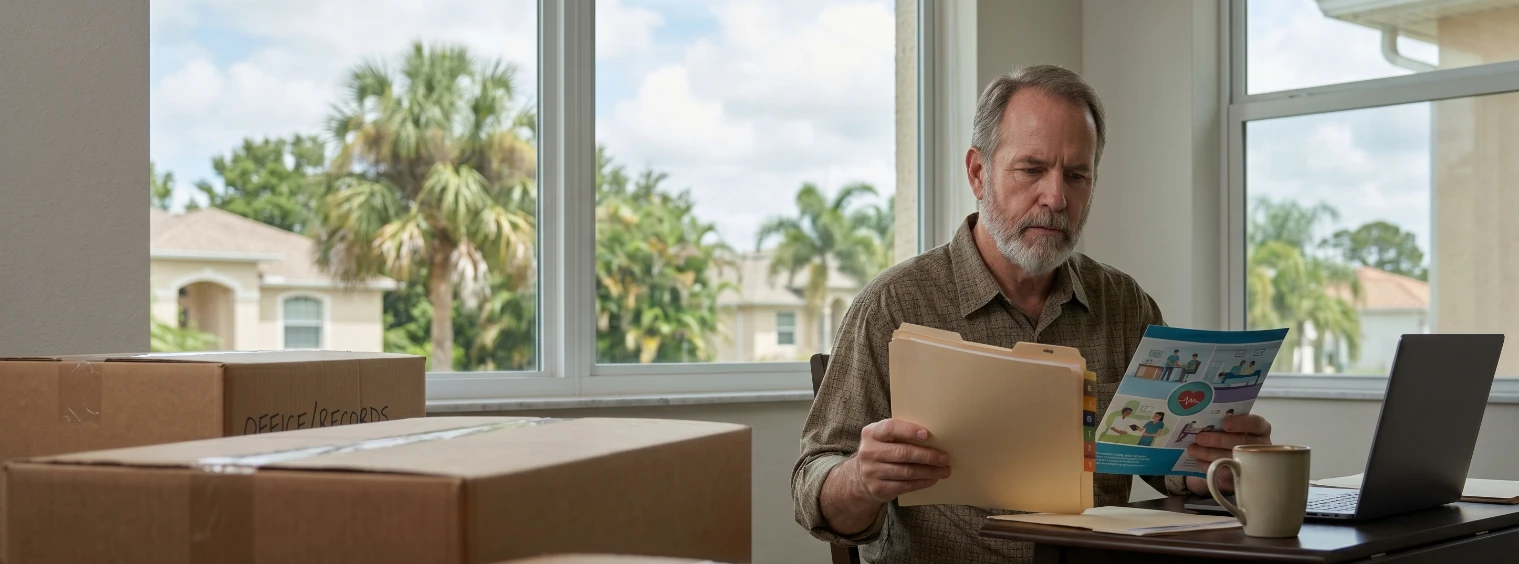
Most people handle the visible parts of a move first. They set up utilities, learn the closest roads, choose a supermarket, and figure out which pharmacy feels convenient. Health care often sits in the background because nothing feels urgent yet. That delay can create avoidable stress when a routine need suddenly depends on old records, refill history, or a doctor who is now hundreds of miles away.
A primary care transfer does not need to feel dramatic. For most people, it simply means building a local place where basic health information makes sense again. A new resident may need help connecting old lab results with current medications, deciding which screenings may be due, or figuring out whether a specialist visit should continue locally. The best time to sort that out usually comes before a symptom or refill deadline forces the issue.
The First Goal Is a Clean Starting Point
A first local health check-in should not require a perfect memory or a binder full of every medical document. The better goal is a clean starting point that explains where things stand now. A patient can start by listing current conditions, regular medications, recent test results, allergies, and any care that still needs follow-up. That basic picture often gives a primary care provider enough context to organize the next steps.
This matters for people who moved from another state, changed insurance, left a large health system, or used several specialists over the years. One person may need blood pressure medication continued without confusion. Another may need thyroid labs repeated after a long gap. Someone else may need help deciding whether an old imaging report still matters. A local primary care relationship can turn those loose pieces into a practical plan.
Direct primary care can fit this situation because it centers on ongoing primary care access rather than one rushed problem at a time. At Fountain of Youth in Fort Myers, Florida, staff stays current on developments related to record transfer, medication-list review, preventive care planning, and local care coordination. That kind of support can help new residents treat the move as a reset point, not a scramble.
Bring the Gaps Before They Become Urgent
A transfer visit can help patients review refill deadlines, old results, and unresolved questions before those details turn into a rushed problem. The contact page gives new patients a direct way to ask about membership-based primary care.
What to Gather Before a First Local Health Check-In
Patients do not need to collect every page from every past visit. The most useful records usually explain active issues, recent decisions, and current risks. Recent lab results, imaging reports, allergy lists, vaccination records, procedure history, and specialist notes for ongoing conditions can save time. A short list of current diagnoses also helps, especially when the old chart uses names the patient does not use in daily conversation.
The Records That Usually Matter Most
Recent labs often tell more than years of older paperwork. A cholesterol panel, kidney function result, thyroid test, A1C, or blood count may help a provider understand what needs follow-up. Imaging reports can matter when a patient has back pain, joint problems, lung findings, abdominal concerns, or previous screening results. Specialist notes can help explain why a medication started, what the last plan said, and whether follow-up still matters.
Vaccine records deserve a separate look because adults often lose track of them during moves. The CDC explains that no national organization keeps vaccination records. Old records may sit with previous doctors, pharmacies, schools, employers, or state systems. A patient who gathers what exists can have a more useful conversation about what looks current, unclear, or missing.
Why Early Record Requests Make Life Easier
Record requests can take time, even when everyone cooperates. Under federal HIPAA access rules, covered entities generally must act within 30 calendar days after receiving a medical-record request. That timeline makes early requests practical for anyone who recently moved to Fort Myers. Waiting until the appointment week can leave the new provider working from memory instead of actual results.
Where to Look When Health Information Is Scattered
Many new Lee County residents do not have one complete medical file when they arrive. This table helps patients track down the overlooked details that often make a first local primary care visit more productive.
| Missing detail | Where to check first | Why it helps the first visit |
|---|---|---|
| Recent lab results | Old patient portal, previous primary care office, lab portal, or printed visit summary | Recent results may show what already looks current and what needs follow-up after the move. |
| Last imaging report | Imaging center, hospital portal, specialist office, or prior primary care office | The written report often matters more than the image file during a first primary care review. |
| Pharmacy history | Previous pharmacy, mail-order pharmacy account, prescription app, or medication bottle labels | Pharmacy details can clarify dose changes, refill timing, and which prescriber last managed the medication. |
| Specialist follow-up plan | Specialist portal, after-visit summary, referral paperwork, or discharge instructions | A prior plan helps a local provider see what needs continued attention in Lee County. |
| Medication side effects or allergies | Old chart notes, pharmacy profile, allergy bracelet record, or personal medication notes | This helps prevent confusion between a true allergy, a side effect, and a medication that simply did not work well. |
| Vaccination history | Prior doctor, pharmacy, employer record, school record, state immunization system, or personal vaccine card | A partial record can still help the provider decide what looks documented and what needs discussion. |
| Home health readings | Blood pressure log, glucose meter, wearable app, notebook, or phone screenshots | Home trends can give more context than a single in-office reading during a first visit. |
| Upcoming refill deadlines | Medication bottles, pharmacy app, mail-order account, or previous prescriber’s refill notes | Refill dates help the provider understand what needs attention soon and what can wait. |
Your Medication List May Need More Attention Than Your Old Chart
Medication lists often become messy during a move. A chart may show an old dose, a pharmacy bottle may show another, and the patient may take the medication differently at home. Supplements, eye drops, inhalers, creams, patches, and occasional medications can disappear from a standard list. Bringing the actual bottles, or clear photos of labels, often solves more than a typed list alone.
A useful medication list includes the name, dose, timing, reason for use, prescribing clinician, pharmacy, and refill deadline. It should also include medicines the patient stopped, especially when side effects or allergies caused the change. The same list should include vitamins and supplements because they can still affect medical decisions. A simple note such as “I take this only when symptoms flare” can prevent confusion during the visit.
The clinical term for checking medication accuracy across a transition is medication reconciliation. AHRQ describes this process as reviewing the complete medication regimen to avoid unintended inconsistencies when care changes hands. Normal patients do not need to use that term. They just need to show what they actually take, what they no longer take, and what needs clarification.
Prescriptions Are Easier to Handle Before the Bottle Is Almost Empty
Prescription stress often starts with a small delay. A patient assumes the old refill will transfer easily, then learns the pharmacy needs more information or the prior prescriber no longer responds quickly. A local provider may need documentation, recent labs, or a visit before continuing certain medications. That process goes better when the patient brings refill dates before the last week of pills arrives.
A new Lee County resident should choose a local pharmacy early and ask the previous pharmacy what can transfer. The patient should also bring the old prescriber’s name, the medication label, and any recent monitoring results tied to that medicine. Some prescriptions involve more caution than others, so no one should assume automatic continuation. Planning ahead protects the patient from a last-minute scramble and gives the new provider a clearer picture.
A First Visit Should Help Connect the Dots
A first local primary care visit should not feel like retelling a whole life story from memory. It should focus on the parts that affect decisions now. Current symptoms, long-term conditions, family history, recent results, medications, allergies, and screening history usually matter most. The visit can also identify which questions need records before anyone makes a firm plan.
Preventive care belongs in this conversation, but it should match the person rather than a generic checklist. Screening discussions can depend on age, symptoms, risk factors, family history, and prior results. A patient who recently moved can use the first visit to ask what appears due, what already looks current, and what needs follow-up. That turns preventive care into a practical calendar rather than a vague reminder.
This visit also helps patients who feel “mostly fine” but know they have unfinished health tasks. A Fort Myers resident may need routine blood pressure follow-up, updated labs after a medication change, or help deciding whether an old referral still matters. Another person may need local documentation for a chronic condition that stayed stable for years. These are normal reasons to set up care, even without a new illness.
This Transfer Step Matters Most When Details Are Unclear
A new primary care relationship can help patients sort the records, refills, and follow-up questions that often surface after a move.
- Several prescriptions changed, and the current home routine no longer matches old paperwork.
- Blood pressure, glucose, fatigue, or symptoms need trend-based follow-up after the move.
- A specialist plan continued from another community, but the next local step feels unclear.
Patients can use the membership details to compare everyday primary care needs with the DPC model.
For stable medication questions, lab review, or follow-up planning, DPC telehealth may help decide whether a remote conversation or in-person visit fits the concern.
Specialist Care Can Get Messy After a Move
Many new residents arrive with care already in progress. They may have a cardiologist, dermatologist, endocrinologist, neurologist, orthopedist, or other specialist from their previous community. That history can matter even when the patient feels stable. A primary care provider can help sort which issues need continued specialty follow-up, which records should come first, and which local referrals may need updated information.
Prior specialist notes can prevent patients from starting from zero. Recent test results may reduce unnecessary repetition and help the next clinician understand the last plan. Insurance rules may still apply for outside specialists, imaging, procedures, and some labs. Direct primary care can help organize the primary care side of the move, but it does not replace specialty care when a condition needs that level of attention.
Four Common Questions After Moving to Lee County
How soon should I set up primary care after moving to Fort Myers?
Most new residents benefit from setting up care before a prescription, symptom, or referral need becomes urgent. People with chronic conditions, several medications, recent procedures, or pending specialist follow-up should move faster. A first local visit can organize records, medication details, and next steps before pressure builds.
What if I cannot get all my old records?
Bring what you can and focus on the information that affects current care. Recent labs, active medications, allergy history, imaging reports, vaccination records, and specialist notes usually help most. A provider can often identify which missing records matter and which ones probably do not need urgent tracking.
Can direct primary care help if I still use insurance elsewhere?
Many people use direct primary care for routine primary care access while still using insurance for outside services. Specialists, imaging, procedures, and certain labs may still involve insurance rules or separate costs. Patients should bring insurance details for outside referrals or services, even when the primary care relationship itself works through a membership model.
What should I bring to the first appointment?
Bring medication bottles or clear label photos, supplement names, pharmacy details, recent labs, vaccine records, and names of prior specialists. A short list of current concerns can help keep the visit focused. Recent test results and refill deadlines also help the provider decide what needs attention first.
Use the Move to Set a Better Care Baseline
The most useful next step is not collecting every old document. It is choosing a primary care path that can organize records, medications, prevention, and follow-up into one workable plan.
A Simple First-Week Health Checklist for New Lee County Residents
A new resident can make the health side of a move easier with a few early steps. Choose a local pharmacy, request key records, download portal summaries, gather medication bottles, save vaccine records, and write down current diagnoses. Add previous specialist names, recent test results, and refill deadlines to the same folder or phone note. That small amount of organization can make the first local visit far more useful.
New Lee County residents do not need to solve everything at once. They need a local starting point, a more accurate medication list, and a clear plan for records, refills, screenings, and follow-up. Questions? We are here to help! Call 239-355-3294.
Medical review: Reviewed by Dr. Keith Lafferty MD, Fort Myers on June 24, 2026. Fact-checked against government and academic sources; see in-text citations. This page follows our Medical Review & Sourcing Policy and undergoes updates at least every six months.