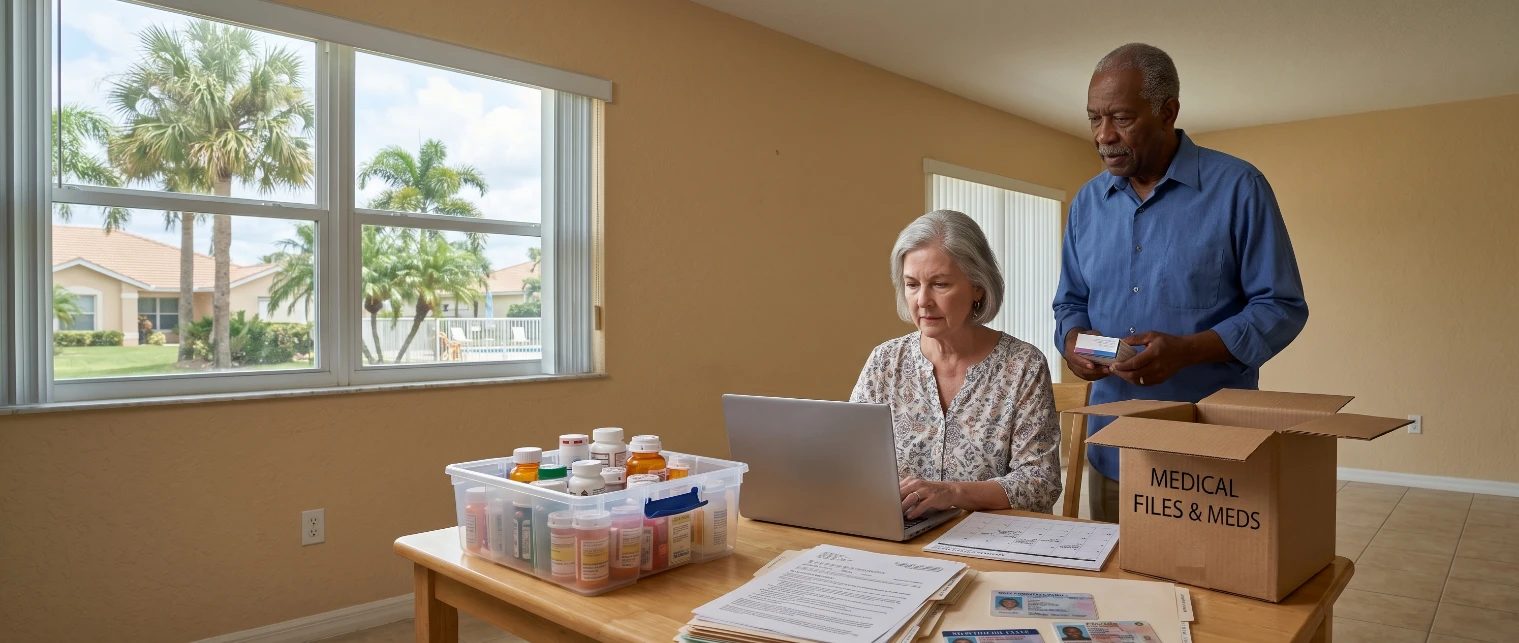
Why seasonal healthcare gets tricky in Lee County
Snowbirds rarely lose track of their healthcare all at once. In Lee County, the problem often builds during everyday seasonal life, after a refill gets delayed, a lab result stays in another portal, or a doctor up north changes a medication that nobody in Florida sees. The county’s resident population reached 875,607 in 2025, according to Census QuickFacts, giving seasonal residents a clear sense of how much local demand has grown. Standard population totals also do not describe every practical pressure people feel during the winter months, when many part-year residents return to Southwest Florida.
Seasonal care works better with a local primary-care plan
- Medication lists, refill timing, and recent changes need one clear place.
- Florida visits can create loose ends when records stay in separate portals.
- A seasonal care plan can clarify what needs local follow-up.
When winter care needs more than an urgent visit
A DPC membership can support routine primary-care questions, medication review, and follow-up planning during the months spent away from home.
Physician-reviewed content • Evidence-aware care • Personalized treatment planning
A clearer path between two homes
Seasonal residents often need practical continuity, not another disconnected appointment. Review the DPC FAQs or meet the care team before seasonal questions become harder to sort.
That matters for people who spend winters in Fort Myers, Cape Coral, Estero, Bonita Springs, or nearby communities. A person may feel settled in Florida for four or five months, yet their primary records, prescriptions, specialists, and routine follow-ups may still sit in another state. Local access can also feel tighter during the busy season, especially when new symptoms appear or a medication question cannot wait. A seasonal resident may not need a hospital visit, but they may still need a local healthcare contact who understands the whole picture.
Primary care for snowbirds works best when it supports normal life, not just urgent moments. Many seasonal residents want someone local who can review the basics, answer practical questions, and keep the Florida months from becoming a healthcare gap. The goal is simple: make sure the patient’s story travels with them.
The real problem is trying to manage care from memory
Many part-year residents carry healthcare details in a mix of memory, pill bottles, portal messages, and old paperwork. That system can work until someone needs the exact medication dose, the last kidney-function result, or the reason a specialist changed a prescription. A Florida provider may hear the broad story but still miss the details that affect safe follow-up. A patient can explain a lot, yet even careful people forget dates, names, doses, and test results.
Care gets harder when each provider sees only one piece of the picture. The home-state primary provider may know the long history, but not the symptoms that started in Fort Myers. Urgent visits in Florida may solve the immediate problem, but not reach the specialist who manages the underlying condition. Cardiology notes may change a medication, but the pharmacy may still show an old refill. Better continuity gives older adults a clearer path through routine care, medication questions, and follow-up decisions.
What a local DPC provider can help with
A local DPC provider should not replace emergency care, hospital care, insurance, or a specialist. The practical role is more ordinary and often more useful: a steady primary care contact during the months spent in Southwest Florida. Seasonal residents may need medication review, lab follow-up, record organization, or a conversation about whether a concern can wait. At Fountain of Youth in Fort Myers, Florida, staff stays current on developments that affect seasonal primary care, including records access, medication-list review, and continuity concerns for part-year residents.
A study of older seasonal migrators found that local primary care was associated with fewer emergency visits that could reasonably fit primary care treatment, including a 58% reduction among snowbirds, according to PubMed. That finding does not mean primary care removes emergencies. Chest pain, severe breathing trouble, stroke symptoms, major injuries, and other urgent problems still require emergency care.
Make a simple health folder before arriving in Fort Myers
A seasonal health folder does not need to become a full medical archive. It only needs to answer the questions a local provider would ask during a first visit or a time-sensitive concern. A folder can live on paper, in a secure digital folder, or both. Many snowbirds keep copies in a travel bag and save updated PDFs on a device they can access easily.
What belongs in the folder
The most useful folder includes a current medication list, allergies, major diagnoses, surgeries, recent labs, recent imaging reports, and the names of active specialists. It should also include the home-state primary provider’s contact details, the preferred pharmacy, emergency contact information, and recent urgent-care or hospital paperwork when relevant. A short health summary can help more than a stack of disconnected pages. Patients who use several portals should write down which system contains which records. The folder works best when it explains what is current, not what happened years ago without ongoing relevance.
Questions? We are here to help! Call 239-355-3294.
Bring the folder, then make it usable
A record folder helps most when a primary-care provider can review it with current symptoms, medications, and follow-up questions. Direct Primary Care at Fountain of Youth can help seasonal residents use those details for practical next steps, especially when telehealth follow-up fits the situation clinically.
Keep medications and refills from drifting
Medication problems often start quietly during seasonal travel. A patient may arrive with enough pills for the first month, then discover that a refill still routes to a pharmacy up north. Another person may bring an old bottle after a provider changed the dose. A third may take supplements or over-the-counter products that never appear in the official record.
A useful medication list includes the drug name, dose, timing, prescribing provider, and reason for taking it. It should also show recent changes, stopped medications, allergies, supplements, and nonprescription products. AHRQ describes medication reconciliation as reviewing the complete medication regimen to avoid unintended inconsistencies across care changes. That process matters for snowbirds because one provider may not know what another provider changed. The list should match what the patient actually takes, not only what appears in a portal.
Refill timing deserves its own plan. Snowbirds should check refill dates before traveling south and again before returning north. Mail-order timing, pharmacy transfers, specialist-only prescriptions, and medications that need lab monitoring can all create avoidable stress.
Move records before there is a problem
Patient portals help, but only when patients know where the important information lives. A portal can become especially useful when a seasonal resident sees more than one health system. Login access matters most before a problem starts, not after someone needs records quickly. ONC explains that patients can request records through portals, forms, email, mail, or fax, and providers should not create unreasonable barriers or delays, according to federal records guidance.
The most helpful records for seasonal primary care usually include recent labs, visit notes, specialist summaries, imaging reports, vaccine records, and medication-change notes. A lab value alone may not explain why the test was ordered, what the provider suspected, or what follow-up should happen. A short cardiology note can matter more than a long list of old test results if it explains a new medication or monitoring plan. Patients should download key PDFs before leaving home, especially when portals require two-factor login tied to a phone or email. A Florida provider can work faster when the record arrives with context.
Patients should also keep records organized in a way they can actually use. A folder labeled by year, provider, or health issue can prevent a stressful search during an appointment. The best system is the one a patient can open quickly when someone asks, “What changed since your last visit?”
When care happens in Florida, do not let it become a loose end
Sometimes a seasonal resident needs urgent care or emergency care during the Florida months. A fall, breathing flare, infection, abnormal lab, or sudden symptom can interrupt even the best plan. The important question comes after the visit: what changed, and who needs to know? New medications, imaging results, follow-up instructions, referrals, or pending tests should not disappear into a portal the patient never checks. Local primary care can help sort non-emergency follow-up and connect the event back to the larger health picture.
This follow-up step matters because urgent visits often focus on the immediate problem. A patient may leave with paperwork but still feel unsure about which medication changed or whether the home-state provider needs the update. A local primary care conversation can clarify what happened and what still needs attention. The home-state provider should receive important records when the event affects ongoing care.
Clear boundaries still matter. Emergency symptoms need emergency care, and DPC does not replace that. After the immediate problem settles, a primary care follow-up can help keep the Florida episode from becoming an unresolved gap.
Chronic conditions do not pause for snowbird season
Ongoing conditions often need attention during months away from home. Blood pressure, diabetes, heart disease, thyroid disease, kidney function, breathing problems, and medication monitoring can all change during a Florida stay. Seasonal routines may shift with different meals, more guests, travel days, warmer weather, and less predictable sleep. A patient who feels stable in October may need a lab check, medication review, or symptom discussion by February.
Local primary care planning can help patients avoid using urgent care as the default answer for routine questions. Someone with blood pressure changes may need home readings reviewed with context. Medications that require periodic labs may need timing coordinated before travel interrupts the plan. Another patient may need help deciding whether a symptom belongs with the local provider, the home-state specialist, or urgent evaluation. Good seasonal care keeps those decisions from landing entirely on the patient.
Before leaving Lee County, close the loop
Leaving Florida should include a healthcare cleanup, not just packing and travel plans. Seasonal residents should confirm recent labs, medication changes, refill needs, referrals, and pending results before they head north. A final visit summary or updated medication list can help the home-state provider see what changed during the winter. This step matters most after new symptoms, new prescriptions, urgent visits, or specialist referrals in Florida. The departure plan should answer whether any result came back abnormal, any medication changed, or any refill needs to transfer back home. A clean handoff reduces confusion when the patient returns home and resumes the rest of their care.
This kind of seasonal gap deserves a primary-care conversation
The right next step depends on the patient’s records, current symptoms, medication list, and travel schedule. Jeff St. Firmin, PA-C can help patients sort routine primary-care concerns and decide what needs follow-up, coordination, or closer monitoring.
- A recent Florida visit changed medications, labs, or follow-up instructions.
- Several specialists manage the record, but nobody has reviewed the full list recently.
- A caregiver needs a clearer plan for refills, symptoms, or seasonal handoff.
A practical visit can help turn scattered details into a safer seasonal care plan.
For medication questions, lab review, or follow-up planning that does not require an in-person exam, DPC telehealth may help clarify the next step when clinically appropriate.
FAQ for seasonal residents in Lee County
Can my Florida provider talk to my provider up north?
Healthcare providers can often share information for treatment coordination. Patients can make that easier by giving both offices accurate contact details and signing releases when requested. Personal copies still help because office-to-office transfers can take time.
What should I bring to a first DPC visit in Fort Myers?
Bring a current medication list, recent labs, specialist notes, pharmacy information, allergies, and your home-state provider’s contact details. A short written summary of current concerns can help the visit stay focused. Insurance cards may still matter for outside labs, imaging, prescriptions, or specialist care. The visit works better when the provider can see what changed recently.
Should I wait until I get home to follow up after care in Florida?
Waiting can create problems when a Florida visit includes medication changes, abnormal results, worsening symptoms, or specific follow-up instructions. A local follow-up can help clarify the next step before travel. The home-state provider should receive important records when the issue affects ongoing care.
What should I do before leaving Fort Myers for the season?
Confirm that no test result, refill, referral, or medication change remains unclear. Save updated records and share important changes with the home-state provider. A simple departure check can keep the next appointment from starting with missing information. The cleanest plan puts the latest Florida updates in one place before travel.
Two useful places to continue from here
Seasonal residents usually benefit from understanding both the membership structure and the boundaries of DPC before deciding whether it fits their care pattern.
Why DPC works differently can clarify the care model, while membership options explain the structure in more practical terms.
Medical review: Reviewed by Dr. Keith Lafferty MD, Fort Myers on July 13, 2026. Fact-checked against government and academic sources; see in-text citations. This page follows our Medical Review & Sourcing Policy and undergoes updates at least every six months.