Here’s what you’ll learn when you read this article:
- How Florida’s emergency refill pathways work, including insurer waivers and pharmacist emergency dispensing.
- How to build a medical go-bag with the exact info pharmacies and clinics need during outages.
- How to time refills and buffers to match hurricane alerts, closures, and evacuation logistics.
Early Refills, Medical Go-Bags, and Continuity When Clinics Close
Hurricane planning for primary care often comes down to medication timing, documentation, and realistic backup options. This guide focuses on early refills, a practical medical go-bag, and the decisions that support continuity when clinics close, pharmacies shorten hours, or travel becomes difficult.
Who this guide is for in Southwest Florida
People who rely on daily or time-sensitive prescriptions
Medication continuity matters most for people who take medicines on a strict schedule and feel the effects quickly when doses slip. Diabetes therapies, seizure medicines, rescue inhalers, and certain heart medications often sit in that category in real life. Many patients also depend on supplies that make the medication usable, which turns a “refill problem” into a “treatment interruption” problem. A hurricane forecast rarely gives the same lead time that refill rules and pharmacy workflows demand, so planning needs to start earlier than most people expect.
People whose care gets disrupted by storm logistics
Storm planning helps anyone who evacuates, loses power, or faces road closures, even when their health stays stable most of the year. Families often juggle prescriptions for older adults, which adds complexity when one person manages several medication routines. Seasonal residents can face extra friction when a prescriber sits in another state and the local pharmacy does not have the full history. People who rely on rides, public transit, or caregivers also face a tighter timing window when pharmacies shorten hours.
The core problem hurricanes create for health care
Storm timelines do not match prescription refill timelines
Hurricanes compress decision-making into a few days, yet many refills follow calendar-based timing rules and “refill-too-soon” edits. Those rules can soften under official storm conditions in Florida, although the window depends on county status and emergency declarations rather than personal preference under F.S. 252.358. Lines, limited staffing, and delivery interruptions can turn a normal same-day refill into a multi-day delay. Patients tend to feel surprised by that mismatch, even though the system behaves predictably under stress.
Information gaps cause delays at the worst time
A refill request goes faster when the patient can state the medication name, dose, directions, and the prescribing clinician’s details. People often know the pill by color or nickname, yet the pharmacy needs exact identifiers during a surge. Phone and internet outages also block portals and electronic records, so a paper list can outperform a smartphone app at the exact moment that matters. CDC preparedness guidance explicitly calls for keeping prescription information and key documents accessible, which matches what pharmacists and urgent care teams ask for during emergencies in the CDC emergency kit checklist.
Supply chain and access issues compound the risk
Pharmacies can close, switch to limited hours, or lose refrigeration, which affects certain temperature-sensitive items. Power loss can also block charging for medical devices, so the “medication plan” needs to include batteries and backup options when relevant. Patients who evacuate can land far from their usual pharmacy network, which increases the value of a clear medication list and insurance information. Research on disaster evacuation shows that medication loss happens often during displacement, which helps explain why a go-bag approach reduces avoidable risk in this Florida Hurricane Irma evacuation outcomes study (PMC).
What “continuity of care” means during a hurricane
The goal: avoid unplanned interruptions
Continuity during a hurricane means you keep essential treatment going through the disruption period, even if you change location. The practical goal focuses on days and weeks, not months, since storm conditions create the highest risk for gaps. A realistic plan treats refills, supplies, and documentation as one package, since all three need to line up for treatment to continue. That framing also helps caregivers, since they can execute a checklist rather than improvise under pressure.
The backup plan: minimize harm if a refill is delayed
A backup plan starts with a buffer supply that covers short disruptions and gives you time to troubleshoot. It also includes a clear threshold for when symptoms require urgent evaluation rather than “waiting it out.” Florida and national preparedness resources repeatedly emphasize keeping medication supplies and personal medical information ready, which reflects the reality that delayed access often stems from logistics rather than medical complexity in Florida Disaster medication guidance and the CDC emergency kit checklist. A backup plan works best when it stays simple enough to follow on a stressful day.
Florida refill pathways people can use during a hurricane
Florida refill pathways people can use during a hurricane
Pathway A: insurance refill timing waivers during official storm conditions
Florida law requires certain insurers and managed care entities to waive time restrictions on refills and cover at least a 30-day supply when specific emergency conditions apply in a patient’s county under F.S. 252.358. Those triggers include a National Weather Service hurricane warning, a Governor-declared state of emergency, or county emergency operations activation tied to an emergency plan, which keeps the rule grounded in official status rather than rumors in Florida Disaster medication guidance. Patients usually experience this pathway at the pharmacy counter as a lifted “refill too soon” block, although plan-specific steps can still vary.
Pathway B: pharmacist emergency dispensing when prescribers can’t be reached
Florida statute allows pharmacists to dispense a one-time emergency refill up to a 72-hour supply when they cannot readily obtain prescriber authorization, provided required conditions and documentation steps fit under F.S. 465.0275. The same statute includes a specific allowance for insulin and insulin-related supplies and equipment, capped at up to three nonconsecutive times per calendar year in the standard, non-emergency setting in F.S. 465.0275. A Governor-declared emergency can expand the pharmacist’s emergency dispensing to up to a 30-day supply in affected areas for essential chronic therapies, and the law excludes Schedule II controlled substances in that context under F.S. 465.0275.
What patients should do if they don’t know which pathway applies
People often do not know whether a plan waiver applies or whether the pharmacist’s emergency authority provides the quickest solution, so a practical approach helps. Your remaining doses, the storm timeline, and your ability to reach the prescriber usually determine the best route. A conversation with the pharmacy staff goes faster when you bring the exact medication list and identify whether you live in a county under an official warning or emergency condition. Florida’s Board of Pharmacy publishes storm-specific reminders that help anchor these decisions in current state guidance in Florida Board of Pharmacy emergency refill guidance.
This chart links common storm alerts and evacuation scenarios to medication steps that matter most in Florida. Timing and definitions align with National Weather Service watch and warning definitions and the NOAA watch vs. warning explainer.
| Official status or scenario | What it means (official language) | Timing window commonly used in alerts | Medication move that matches the moment | Information or items to have ready |
|---|---|---|---|---|
| Tropical Storm Watch | Tropical storm conditions are possible. Definitions used in public alerts appear in National Weather Service guidance. | Within 48 hours in the standard alert window described by the National Weather Service. | Check remaining doses for high-priority meds and supplies, then identify any refill needs that could become urgent if pharmacies shorten hours. | Medication list with exact names and doses, plus pharmacy and prescriber phone numbers from the CDC emergency kit checklist. |
| Tropical Storm Warning | Tropical storm conditions are expected. Definitions used in public alerts appear in National Weather Service guidance. | Within 36 hours in the standard alert window described by the National Weather Service. | Finalize refills you still need and pack a go-bag that stays with you if evacuation becomes likely. | Paper copies of key documents stored for storm conditions as described in the CDC emergency kit checklist. |
| Hurricane Watch | Hurricane conditions are possible. Definitions used in public alerts appear in National Weather Service guidance. | Often issued about 48 hours in advance; timing context also appears in NOAA watch vs. warning guidance. | Move from planning to execution: request needed refills and confirm you can access essential supplies (testing strips, inhalation equipment, device chargers). | Insurance cards, photo ID, and the medication list you can hand to a pharmacist. |
| Hurricane Warning | Hurricane conditions are expected. Definitions used in public alerts appear in National Weather Service guidance. | Often issued about 36 hours in advance; timing context also appears in NOAA watch vs. warning guidance. | Complete medication pickup and finish packing; avoid waiting for “the last run,” since travel and lines can become unsafe. | Go-bag ready by the door with meds, supplies, and documents in one place. |
| Florida “30-day refill” eligibility conditions | Florida law and state guidance describe county triggers for early refills. See F.S. 252.358 and Florida Disaster medication guidance. | Requested within the window described in F.S. 252.358. | Ask the pharmacy to apply the early-refill pathway if “refill too soon” blocks you. | County of residence, bottle label, and the exact medication name and dose. |
| Prescriber unreachable | Florida law describes emergency dispensing options when a pharmacist cannot readily obtain prescriber authorization in F.S. 465.0275. | Most likely during clinic closures and communications outages. | Discuss pharmacist emergency options and present documentation that supports safe continuity decisions. | Medication list, allergies, key diagnoses, and your prescriber and pharmacy phone numbers. |
| Evacuating to a shelter | Florida’s shelter planning guidance lists medical items to bring. See What to Take to a Shelter. | Duration can extend beyond a few days depending on damage and access. | Pack for continuity, not convenience: bring enough medication, documentation, and the equipment that makes treatment possible. | Medical supplies and prescription documentation described in Florida’s shelter checklist. |
| Document protection during storms | The CDC checklist lists the prescription information that belongs in your kit. See the CDC emergency kit checklist. | Most useful before and during displacement. | Store medical records and prescription info so you can access them during outages. | Medicine name and dose, plus pharmacy and prescriber contact details from the CDC emergency kit checklist. |
A refill timing game plan that matches hurricane reality
Start earlier than you think
A forecast can change fast, yet the best refill outcomes usually come from action before the rush. Patients tend to wait until a warning arrives, then they meet long lines and reduced pharmacy hours at the same time as everyone else. A plan should treat refills like fuel, since you top off before the drive rather than during the traffic jam. Your calendar can include “hurricane readiness check” dates during the season, which reduces last-minute pressure when the Gulf heats up.
Build a “minimum on-hand” buffer that stays current
Florida’s emergency preparedness guidance recommends keeping at least a two-week supply of necessary prescription medications, and it emphasizes keeping the supply current and unexpired in Florida Disaster medication guidance. CDC preparedness guidance similarly lists at least a two-week supply of prescription medicines in family emergency kit planning in the CDC emergency kit checklist. A buffer works only when you rotate it, so you use the oldest supply first and replace it at the next refill. This approach reduces waste and avoids the false comfort of expired stock that cannot reliably support your plan.
Prioritize medications by medical risk
Storm planning improves when you sort medications into tiers based on what happens if you miss doses. People often think only about prescriptions, yet supplies such as glucose testing materials or inhalation equipment can matter just as much for continuity. Your prescriber or pharmacist can help you identify which items need the tightest adherence, and the list can live in your go-bag for quick reference. Hurricane disruptions also increase stress and sleep changes, which can magnify symptoms for some conditions, so your tier list should focus on what you already know about your body.
Building a medical go-bag that actually works
The essentials that prevent refill delays
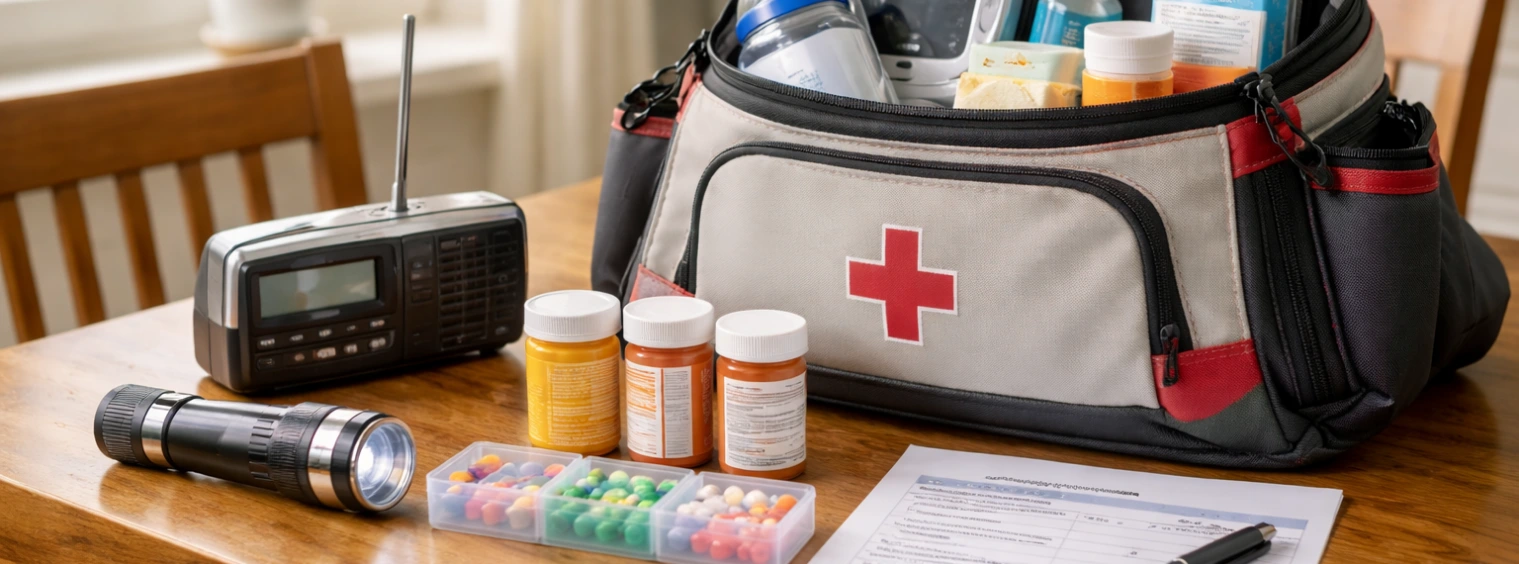
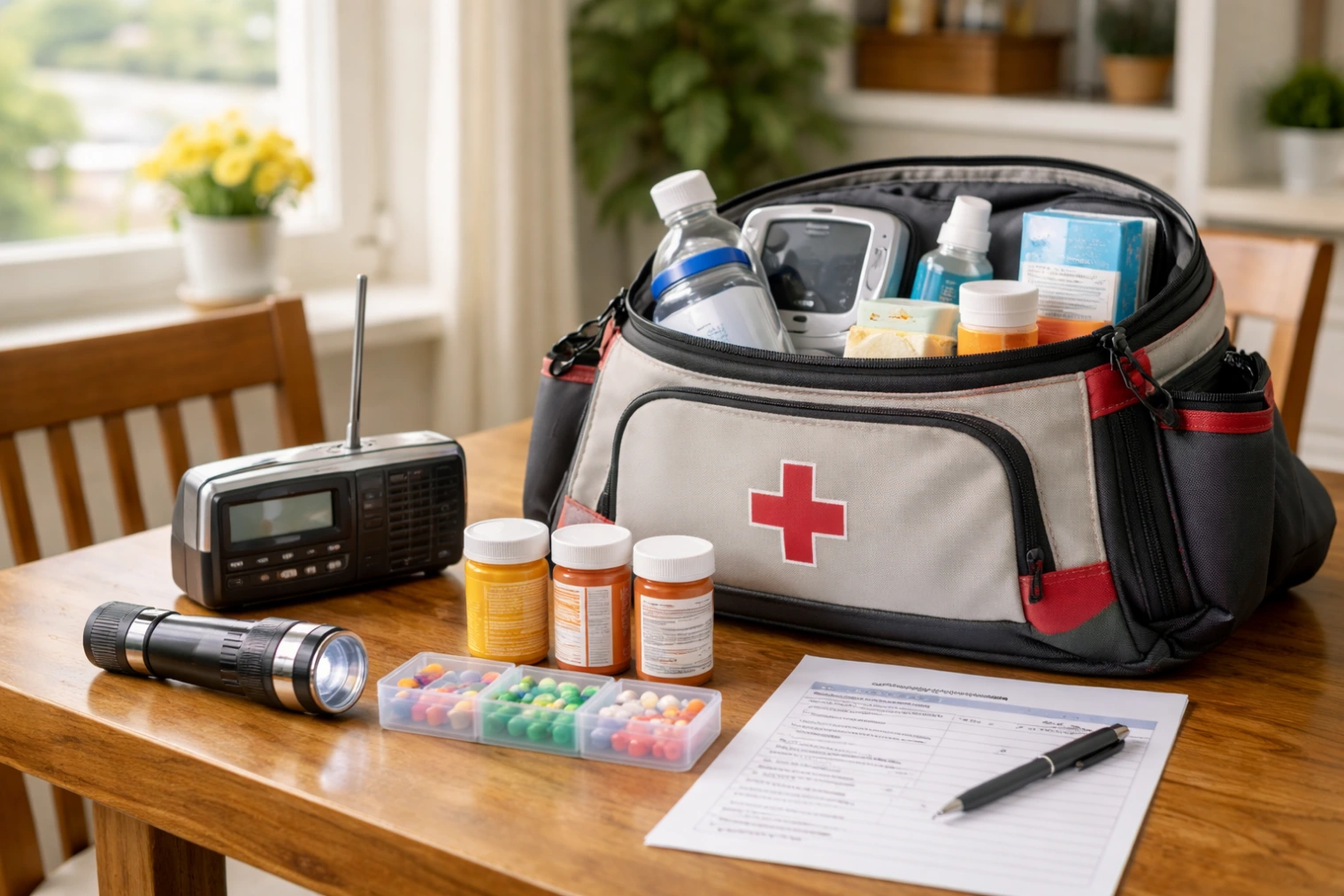
A go-bag needs more than bottles, since medication continuity depends on information and access. Florida’s medication preparedness guidance recommends keeping a medication list with names, dosages, and special instructions alongside your supplies in Florida Disaster medication guidance. CDC guidance calls for prescription information that includes the medicine name and dose, plus the pharmacy and doctor contact details, which aligns with what refill conversations require in the CDC emergency kit checklist. Your bag should also include insurance cards and a brief medical summary that lists key diagnoses and allergies, since urgent care teams often need those basics first.
Keeping documents usable in real storm conditions
Paper can outperform electronics when you face outages, dead batteries, or weak signal, so waterproofing matters. CDC guidance recommends keeping copies of key documents in a waterproof, fireproof portable container, which fits hurricane realities like flooding and roof leaks in the CDC emergency kit checklist. Phone photos still help, and they work best when you save them in a favorites album that stays easy to find under stress. A simple test helps: open your medication list photo in airplane mode, which simulates an outage without drama.
Medications that need special handling
Some medications and supplies lose effectiveness when heat rises or refrigeration fails, which turns power loss into a medical issue rather than an inconvenience. A realistic plan identifies what needs temperature control, then maps that need to your likely living situation during and after the storm. People also forget chargers and batteries for devices that support treatment, so your plan should include power solutions that match your risk profile. Disaster evacuation research highlights frequent medication loss and disruption, so a handling plan reduces the odds that you arrive at your destination without what you need in this Florida Hurricane Irma evacuation outcomes study (PMC).
Home kit vs. go kit
The “stay-at-home” kit for sheltering in place
A home kit supports you when you shelter at home, lose power, and see closures around you. The American Red Cross describes a baseline survival kit that includes medications, often framed as a 7-day supply for the kit itself, which can serve as a starting point for household planning in Red Cross survival kit supplies. Their hurricane guidance also points toward a stay-at-home kit for longer disruptions, which matches the reality of multi-day recovery timelines in Red Cross hurricane preparedness. Home storage works best when you choose one consistent location and keep a written inventory that prevents accidental double-buying.
The “grab-and-go” kit for evacuation
A go kit needs to fit into a bag you can carry quickly, which forces prioritization. The Red Cross hurricane checklist calls out preparation for evacuation and emphasizes keeping personal documents and medical information accessible, which supports a tight, travel-ready setup in Red Cross hurricane preparedness. Your go kit should include the medication list, a small supply buffer, and essential devices or supplies that make the medication usable. A kit also benefits from a quick “last check” routine so you do not leave items in the refrigerator or medicine cabinet.
How to prevent the most common failure points
The “refill too soon” barrier
A plan waiver can apply under Florida emergency conditions, yet the pharmacy still needs to process the claim correctly, and the staff may handle a surge of similar requests under F.S. 252.358 and Florida Disaster medication guidance. You can help by stating that you seek an early refill due to storm conditions in your county and by presenting your medication list with exact identifiers. People often assume the pharmacist controls the insurer’s rules, so calm communication reduces friction and saves time. If the claim still denies, ask what information the pharmacy needs to reprocess it under the emergency waiver pathway.
The missing-prescription-info barrier
Missing details create delays when electronic records do not load or when you fill in an unfamiliar location. CDC guidance spells out the prescription information that belongs in your kit, including medicine name and dose, plus pharmacy and doctor contact information in the CDC emergency kit checklist. Your medication list can also include the reason you take each medication, since that context helps clinicians make safe decisions during urgent refills. A short list beats a perfect list, so start with essentials and expand it gradually.
The “multiple prescribers” barrier
Patients who see multiple clinicians often face conflicting refill instructions, especially when a storm disrupts communication. One list that includes each prescriber’s name and which medications they manage can reduce confusion. You can also write your “primary pharmacy” on the list so any new clinician knows where your history lives. Disaster displacement research shows medication loss and refill difficulty, and multiple prescribers can amplify that difficulty, so coordination protects your continuity in this Florida Hurricane Irma evacuation outcomes study (PMC).
What patients with higher risk should plan differently
Diabetes and insulin-dependent care
Insulin needs more than a prescription label, since treatment depends on supplies and safe storage. Florida law includes special provisions for emergency refills of insulin and insulin-related supplies and equipment under pharmacist authority, which gives patients a defined pathway when prescribers remain unreachable in F.S. 465.0275. Temperature control also matters for insulin, so your plan should include a realistic storage approach during power loss and evacuation. A two-week supply goal and a documented medication list provide a practical foundation for continuity planning in Florida Disaster medication guidance and the CDC emergency kit checklist.
Seizure disorders and other time-sensitive therapies
Some therapies require steady dosing, and missed doses can trigger symptoms quickly for certain patients. Your go-bag should include an updated list and enough supply buffer to cover short-term disruptions, which aligns with Florida and CDC preparedness guidance in Florida Disaster medication guidance and CDC emergency kit checklist. A storm plan also helps you avoid “pill counting” decisions under stress, since you can check your list and refill timing in advance. If symptoms escalate, an urgent evaluation can become safer than waiting for a routine refill to resume.
Respiratory disease, heart disease, and other chronic illness
Respiratory and cardiac symptoms can worsen when heat rises, smoke lingers, or stress builds during long outages. A hurricane plan should include rescue medicines, maintenance medicines, and the devices or supplies that support them, such as spacers or nebulizer components when relevant. Patients also benefit from writing down their personal “red flags,” such as breathing difficulty that does not respond to usual rescue therapy. County-wide disruptions can push people toward emergency departments, which research on disaster impacts has documented in vulnerable populations after major storms in this Florida Hurricane Irma evacuation outcomes study (PMC).
Older adults and caregiver-managed medication routines
Caregivers need a plan that stays easy to execute, since complexity creates mistakes during stress and sleep disruption. A single medication list with doses, instructions, and pharmacy contact details can anchor the routine when routines break in the CDC emergency kit checklist. The plan should also include where medications live in the home and who carries the go-bag during evacuation. Research on storm disruption shows that health care utilization can rise after evacuations for vulnerable groups, so preparation can reduce avoidable deterioration in this Florida Hurricane Irma evacuation outcomes study (PMC).
What to do if the clinic is closed and you can’t reach your prescriber
First steps that can solve the issue quickly
Start by checking your medication list and confirming the exact name and dose, since precision helps the pharmacy move faster. Contact the pharmacy early in the day, then explain your situation and ask about the emergency refill pathway that fits current storm conditions. Florida statutes define pharmacist emergency authority in F.S. 465.0275, and the Board of Pharmacy provides storm-related reminders in Florida Board of Pharmacy emergency refill guidance, so your request can stay anchored in existing rules rather than improvisation. If you need a local, practical conversation about how these rules apply to your specific situation, Fountain of Youth in Fort Myers tracks changes and guidance on hurricane-season medication continuity so patients can plan with current information.
When to seek urgent in-person care
A refill problem can become a medical problem when symptoms escalate, so you should set clear thresholds before the storm hits. Worsening breathing trouble, confusion, severe weakness, chest pain, or uncontrolled blood sugar symptoms warrant urgent evaluation rather than waiting for a pharmacy workflow to resolve. Caregivers should trust their instincts when a loved one’s condition changes fast, since delayed treatment can create harder recoveries after the storm. Questions often come up in this moment, so keep one reliable point of contact ready: Questions? We are here to help—call 239-355-3294 for guidance on next steps.
3 Practical Tips
- Keep a wallet-size medication card that lists medication names, doses, your pharmacy number, and one prescriber contact.
- Rotate your buffer supply by placing new refills behind older stock, then use the oldest supply first so the two-week goal stays current.
- Store one clear photo of your medication list and insurance card in a favorites album on your phone, and test access in airplane mode before hurricane season peaks.
FAQ
How early should I try to refill prescriptions when a hurricane is forecast?
Refill timing works best when you act before a surge hits pharmacies, since staffing and delivery delays tend to appear as the forecast tightens. Florida law can open an early refill pathway under official emergency conditions, and you still need time for the claim to process and the medication to be filled under F.S. 252.358. Your medication buffer should cover short disruptions, and the two-week supply target in preparedness guidance gives a practical benchmark in Florida Disaster medication guidance.
What should be on my medication list so a pharmacist can help quickly?
A useful list includes the medication name, dose, and directions, and it also includes the pharmacy name and phone number plus the prescriber’s name and phone number. CDC preparedness guidance lays out these prescription information elements, which reflect what pharmacists ask for during urgent requests in the CDC emergency kit checklist. Add allergies and key diagnoses if you can, since that context supports safer decisions during emergency refills. Keep the list in your go-bag and store a phone photo backup that works without internet access.
If my doctor’s office is closed, can a pharmacist still give me an emergency refill?
Florida statute allows a pharmacist to dispense an emergency refill up to a 72-hour supply when the pharmacist cannot readily obtain prescriber authorization, and the law includes specific insulin-related provisions as well in F.S. 465.0275. A Governor-declared emergency can allow up to a 30-day supply for essential chronic therapies in affected areas, and the law excludes Schedule II drugs under that emergency provision in F.S. 465.0275. The pharmacy still needs documentation steps and clinical judgment, so your medication list and storm status information can help the process move faster.
What medication and document supplies should I pack if I might evacuate?
Preparedness guidance points toward a medication supply buffer and a clear list of prescriptions with doses and instructions, and Florida’s disaster guidance recommends at least a two-week supply that stays current and unexpired in Florida Disaster medication guidance. The Red Cross kit guidance often starts with a baseline kit that includes medications, and its hurricane planning materials emphasize longer disruption readiness and accessible medical information in Red Cross survival kit supplies and Red Cross hurricane preparedness. Pack documents in a waterproof container, and keep a phone photo backup so you can access key details during outages.
A calm checklist you can run 48–72 hours before expected landfall
Refill and supplies check
Count remaining doses for the medications that matter most, then compare it to the likely disruption window. Confirm pharmacy hours, and identify one alternative location in case your primary pharmacy closes or loses power. A county’s official storm status can affect early refill pathways in Florida, so check official updates rather than social media under F.S. 252.358. Recheck supplies that make medications usable, since missing items like testing strips can derail a plan even when the medication itself sits ready.
Documentation check
Update your medication list so it includes names, doses, and instructions, then add pharmacy and prescriber contact details as CDC guidance recommends in the CDC emergency kit checklist. Place a paper copy in a waterproof container and store a phone photo backup that you can open without internet. Check your insurance cards and photo ID, since pharmacies often need them during claim processing and identity verification. A short medical summary can also help if you seek care at an unfamiliar clinic during evacuation.
Safety check for storage and transport
Plan for heat and power loss, since storage conditions can matter for certain medications and supplies. Confirm where you will keep temperature-sensitive items if you lose electricity, and avoid leaving medications in a hot car during travel stops. Pack essential devices and the supplies that support them, then include chargers or batteries that match your realistic power options. Disaster evacuation research reports frequent medication loss during displacement, so a deliberate storage plan reduces the odds of arriving without the tools you need in this Florida Hurricane Irma evacuation outcomes study (PMC).
After the storm: getting back to normal without mistakes
Restart routines carefully
Storm disruption can scramble timing, so you should restart routines with deliberate checks rather than memory alone. Use your medication list to confirm each dose and schedule, and pay attention to any changes made during emergency care. A caregiver can help by using a simple written checklist for the first few days, since fatigue and stress can trigger accidental double dosing. Store your updated list back in the go-bag, since the next storm can arrive before you expect.
Rebuild the buffer supply
Replace what you used from your buffer so you restore the two-week readiness target recommended in preparedness guidance in Florida Disaster medication guidance. Rotate stock so older supplies move forward, and discard expired medications according to pharmacy guidance rather than keeping them as false security. If your pharmacy experienced shortages, ask about realistic restocking timelines so you can plan the next refill window calmly. Your goal should focus on rebuilding stability, not on stockpiling beyond what you can safely rotate.
Watch for health changes that can follow disruptions
Pay attention to symptoms that persist after the storm, since stress, heat exposure, disrupted sleep, and missed doses can ripple for days. Vulnerable populations can show increased health care needs after major storms, and evacuation itself can correlate with increased acute care use in some settings, so early attention can prevent worsening in this Florida Hurricane Irma evacuation outcomes study (PMC). Reach out for care when something feels off rather than waiting for a perfect moment, since recovery periods often stretch schedules and access. Your storm plan should evolve after each event, and small improvements can make the next disruption easier to manage.
Medical review: Reviewed by Dr. Keith Lafferty MD, Fort Myers on February 12, 2026. Fact-checked against government and academic sources; see in-text citations. This page follows our Medical Review & Sourcing Policy and undergoes updates at least every six months.